
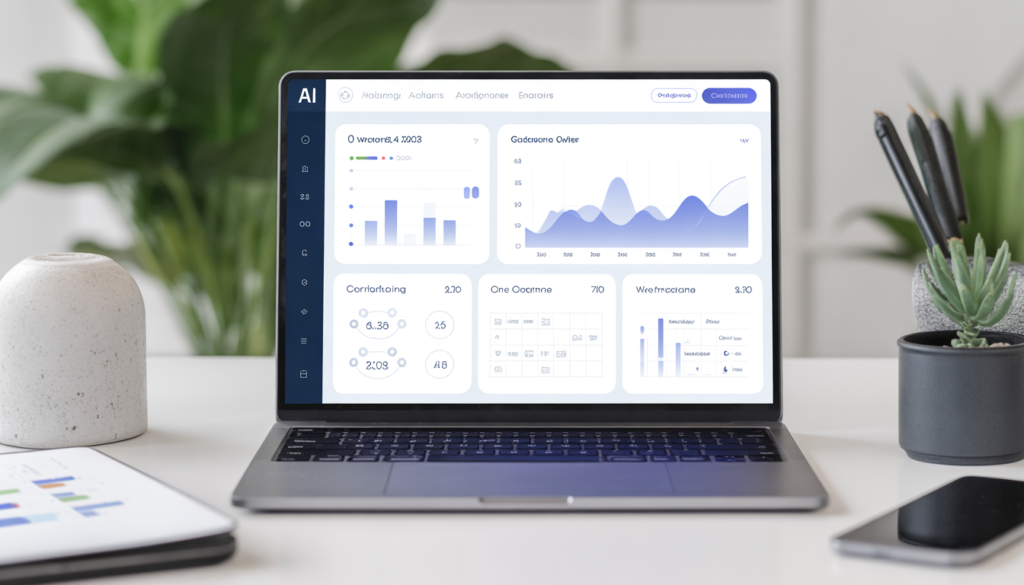
Most marketers track the wrong metrics. Learn which AI marketing metrics actually matter and how to measure real performance in 2026.
Understanding AI marketing metrics is essential if you want to improve real performance.
Most marketers are tracking the wrong metrics.
They focus on impressions, clicks, and vanity numbers — but these rarely translate into real business results.
I’ve seen teams spend weeks optimizing dashboards… without improving revenue.
This guide will show you which AI marketing metrics actually matter — and how to focus on data that drives real growth.
Real Example: How to Use AI Marketing Metrics in Practice
Let’s say you’re running a small business or agency.
Instead of tracking 20 different metrics, you focus on just three:
- Conversion rate
- Customer acquisition cost (CAC)
- Revenue
You notice that your traffic is increasing — but conversions are low.
Instead of chasing more traffic, you focus on improving your landing page.
After optimizing your page, conversions increase — and revenue follows.
This is the difference between tracking data… and using it.
Metrics You Can Ignore (Most of the Time)
- Impressions without conversions
- Likes and social media vanity metrics
- Page views without engagement
- Clicks without outcomes
These numbers can look good — but they rarely tell you if your marketing is actually working.
A Simple Framework for Choosing the Right Metrics
Instead of tracking everything, use this simple rule:
- Traffic → Are people finding you?
- Conversion → Are they taking action?
- Revenue → Are you making money?
If a metric doesn’t fit into one of these categories, it’s probably not essential.
The Problem With Most Marketing Metrics
The biggest issue isn’t lack of data — it’s tracking the wrong data.
- Too many vanity metrics
- No connection to revenue
- Overcomplicated dashboards
- No clear decision-making
More data doesn’t mean better decisions.
Better data does.
What Actually Matters in AI Marketing
AI makes it easier to track everything — but that doesn’t mean you should.
The goal is simple:
- Track fewer metrics
- Focus on outcomes
- Measure what drives growth
According to Google’s helpful content guidelines, content should be written for users first.
Why Most Teams Get This Wrong
Many teams track dozens of metrics — but still don’t know what to do next.
That’s because tracking data is easy. Using it correctly is hard.
The goal is not to have more dashboards, but to make better decisions.
AI Marketing Metrics That Actually Matter
Conversion Rate
This is one of the most important metrics. It shows how many visitors take action.
Customer Acquisition Cost (CAC)
How much it costs to acquire a customer. Lower is better.
Return on Investment (ROI)
The most important metric — are you actually making money?
Customer Lifetime Value (LTV)
How much a customer is worth over time.
Engagement (That Leads Somewhere)
Not just clicks — but meaningful interaction.
My Honest Take on Marketing Metrics
Most dashboards look impressive — but they don’t help you make better decisions.
The only metrics that matter are the ones that change what you do next.
If a metric doesn’t influence your decisions, it’s probably not important.
The right AI marketing metrics help you focus on what actually drives growth.
How to Track the Right Metrics (Simple Approach)
Step 1: Start With Your Goal
Are you trying to get leads, sales, or traffic?
Step 2: Choose 2–3 Key Metrics
Don’t track everything. Focus on what matters.
Step 3: Ignore Vanity Metrics
Likes and impressions look good — but don’t always mean growth.
Step 4: Track Trends, Not Just Numbers
Look at progress over time.
Step 5: Adjust Based on Data
Metrics should help you make better decisions.
What You Should Do Next
If you want to improve your marketing results:
- Pick one key metric (like conversion rate)
- Focus on improving it for the next 30 days
- Ignore everything else
Simple focus beats complex dashboards every time.
Focus on AI marketing metrics that actually help you make better decisions.
The best AI marketing metrics are not the ones that look impressive — but the ones that help you make better decisions.